Tuesday, September 27, 2011

Stomach Ulcer Symptoms or Just Heartburn?


 Ulcers typically occur in the duodenum, which is found just past the pyloric sphincter. A minority of ulcer cases occur in the stomach itself.
Stomach ulcers symptoms and heartburn symptoms are very similar, causing many people to confuse these two conditions. In this article, we will be revealing to DCDDISCs readers some simple methods for telling these two conditions apart.

Stomach Ulcer Symptoms vs Heartburn
The primary reason for the confusion between stomach ulcer symptoms and heartburn symptoms is due to the fact that both can result in burning stomach pain. However, there are some simple ways to tell these two conditions apart.

Here is a list:
Stomach ulcer symptoms are worse an empty stomach and typically get better after eating. Heartburn symptoms on the other hand typically peak after eating (or within an hour or two of eating).
The end result is that people who have stomach ulcer symptoms may find themselves getting woken up in the middle of the night or early in the morning with burning stomach pain.

Those who suffer from heartburn will rarely make it to bed in the first place; they will experience their heartburn symptoms right when lying down and may not make it asleep in the first place!
Peptic ulcer symptoms typically center on burning stomach pain, whereas heartburn centers on burning chest pain.

I think this is a pretty simple distinction; most people with ulcer pain will feel it right around their stomach, whereas heartburn is typically felt in the chest, directly behind the sternum along the mid-line of the torso.
Heartburn symptoms can often be manipulated by changing body position, whereas stomach ulcer symptoms tend to remain constant.

If you experience a surge in symptoms if you bend forward or lie down, odds are you are dealing with heartburn. Stomach ulcer symptoms typically not easily manipulated simply by changing body position.
Stomach ulcer symptoms do not respond to heartburn remedies, whereas heartburn remedies can be used to significantly reduce heartburn symptoms.

A lot of heartburn remedies, such as chewing gum, can reduce heartburn symptoms. This remedy aids digestion by producing saliva and encouraging the digestion of food. Many people suffering from heartburn will experience immediate relief from symptoms as soon as they start chewing on a piece of gum.
On the other hand, ulcer symptoms are not easily remedied except via eating food or usage of a stomach-coating agent such as pepto-bismol. Those who suffer from stomach ulcer symptoms are not likely to get relief unless they are able to do something to reduce the severity of their ulcer.

Both serious ulcers and heartburn may result in chronic symptoms.
The most important thing to know about both stomach ulcer symptoms and heartburn is that both conditions warrant doctor attention should they become chronic.

Ulcers rarely go away on their own and typically need antibiotic treatment. Heartburn on the other hand, if it occurs over time, may actually be gastroesophageal reflux disease, or GERD for short.

If both conditions are left untreated, serious complications may result. Due to this, if you experience either stomach ulcer symptoms or heartburn symptoms on a regular basis you will want to talk to your doctor to see if you need treatment.


View the original article here

Monday, September 26, 2011

Are There Any Effective Heartburn Remedies?


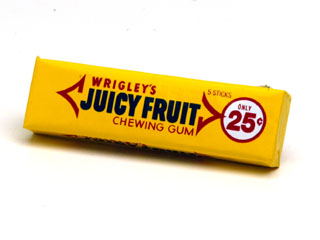
 Juicy Fruit is a surprisingly effective heartburn remedy. Lightly-flavored non-mint gums work best to relieve heartburn symptoms.


If you have to deal with heartburn regularly, no doubt you have wondered if it was possible to get relief from heartburn via home remedies. There are hundreds of heartburn remedies all reported to provide relief anecdotally, but how does the evidence stack up?

We found one site in particular, Heartburn Remedies, which hands-down offers the best exploration of the validity and possible mechanisms behind some popular heartburn remedies. The two remedies that they recommend are chewing gum and vinegar.

The evidence behind the use of chewing gum seems to be extremely convincing. There are a few proposed mechanisms through which it can contribute. Firstly, chewing gum produces saliva, which is then swallowed, which can then aid digestion in the stomach by helping to break down food. Indeed, researchers have found that those who chew their food appropriately are significantly less likely to experience heartburn than those who do not chew their food much as all.

However, saliva not only aids digestion but has other significant contributors to remedying heartburn. After a time of chewing gum, the saliva released appears to increase in pH, moving from a neutral liquid to a base. This base then coats the esophagus as it is swallowed, giving the esophagus a basic pH. This is an amazing protective mechanism.

If you are not familiar with the pH scale, allow us to explain. Neutral solutions have a pH of 7, and are in the middle of the pH chart. Acidic solutions have a pH less than 7, on a scale of 0-7. The lower the number, the more acidic the solution. Stomach acid has a pH in between 2 and 3, which is quite acidic. Acids are produced when a solution has a lot H+ (hydrogen ions), whereas bases are produced when a solution has a lot of OH- (hydroxide ions).

When acids and bases meet, they cancel each other out in a process called neutralization. H+ combines with OH- to form H20, also known as water. Since H+ and OH- have opposite charges, they cancel out as well, leaving us with a harmless solution of water.

Back to the example – when the OH- in our basic saliva comes in contact with the H+ ions in our stomach acid in the esophagus, they neutralize one another. This of course depends on relative content; you will need a lot of saliva to neutralize just a small amount of stomach acid. Fortunately, chewing gum produces large amounts of saliva and acid reflux is often caused by a very small amount of acid (often diluted by being mixed with the stomach’s contents). As a result, there is a lot of strong evidence that chewing gum is an effective heartburn remedy.

The only side-note is that peppermint and spearmint gums should not be used. Mint can stimulate the production of HCl (stomach acid) in a lot of individuals and should be avoided if you experience heartburn regularly.

The other heartburn remedy promoted by the site in question is vinegar. The idea is that taking a small amount of vinegar compels the salivary glands to produce massive amounts of saliva, even more than you might experience from chewing gum. The protective effects work in quite the same way and there is merit to this approach as well.

All in all, there are some effective home heartburn remedies, and you do not have to open up your wallet to get access to them – both of these items are already in most homes or can be obtained for 1$ or less.


View the original article here

Saturday, September 24, 2011

Iodine Supplements and Heartburn

As early as 1982, researchers have been able to demonstrate a solid link between acid reflux and hypothyroidism (1). It is theorized that hypothyroidism may effect the motility of the esophagus and reduce lower-esophageal sphincter pressure (1).


It is fairly safe to say that hypothyroidism and heartburn are related. However, is there anything we can do about this? Of course – and you are about to find out what!


Iodine Supplementation – A Possible Heartburn Remedy?


One of the biggest contributing factors to hypothyroidism (and as such, thyroid-related acid reflux) is inadequate iodine intake.


In response to a few studies demonstrating that high iodine intake leads to possible cancer and hypothyroidism, Iodine has received a particularly bad reputation lately.


However, you should know that this study did confirm that high iodine intakes may cause cancer or lead to hypothyroidism, the “excessive” group excreted a median of 651 micrograms per liter of urine (2). While, this may not seem like a lot, consider this:

The average human excretes 1.5 liters of urine a day.The recommended daily allowance for iodine intake is 150 micrograms.

So, in order to be excreting (sans what their body was actually using) over 1,000 micrograms a day, the average person in the excessive group in this study was easily consuming an average 5 times the recommended daily allowance for iodine for a length of time.


As a result, the average person in a modernized nation is going to rarely be consuming those levels of iodine. This is much more typical of an eastern diet which includes a lot of seaweed and kelp. These plants contain extremely high levels of natural iodine not approached by any other food on the planet!


Now that we have got that out of the way, another study of a similar population confirmed that unusually low levels of iodine intake are associated with thyroid disease (3). We knew this all along, but it is good to see some positive research since the “high iodine” study.


The Dark Side of Sea Salt


Iodine intake has always been quite naturally low in the western diet. In order to combat this issue, most salts in the USA have been iodized. Since salt is used ubiquitously in cooking, it was thought that this would significantly reduce iodine deficiencies (and indeed it did).


The problem is now sea salt has begun replacing normal salt on many tables. For some reason sea salt is thought as some sort of health food because its natural, but the truth is it lacks iodine which is far more essential of a nutrient than any mystery minerals which might be found in sea salt.


Unless the package specifically says iodized, your sea salt has no significant levels of iodine. You can buy iodized sea salt online, but I have not seen it in the typical grocery store.


With this in mind, consider adding iodized salt to your acid reflux diet. If you cannot add salt to your diet to due to restrictions (such as edema or high blood pressure), consider an iodine supplement. A very small supplement of just 100-150 micrograms (micro, not milli) should be fine. Be careful, because many iodine supplements are 600+ micrograms, which is unsafe unless done under a doctor’s supervision (as a doctor can collect and monitor bloodwork and urinalyses).


Important: Do not take an iodine supplement if you are taking medication already for hyperthyroidism (overactive thyroid). If you already eat a iodine-rich diet (i.e. eastern diet rich in seaweed or kelp) do not use an iodine supplement.


Other Ways to Help Hypothyroidism


In addition to adding iodine to the diet, another great way to help get your thyroid back on track is to lose weight. I know a lot of people say that the reason they are fat is hypothyroidism, but the truth is that in most people the situation is reversed.


A small minority of the population has thyroid problems due to genetics, cancer, radiation exposure, or other illness. A vast majority of the population is experiencing poor thyroid function due to obesity. Obesity negatively impacts every body system, and the thyroid is no difference from this.


When you consider this, it is not surprising that diagnoses of thyroid disorders have exploded over the last 15 years and obesity has exploded over the last 20 years. This is not a coincidence.


The good news is that both heartburn and thyroid disorders often become milder (and frequently reverse) when you lose weight. This allows you to tackle acid reflux from two fronts through weight loss.


Medication


Of course, many will elect to go on medication for hypothyroidism if diagnosed. This is entirely up to you and your doctor. Many people report great improvements to their quality of life after starting this medication.


If you are experiencing symptoms of hypothyroidism such as brittle nails, dry skin, cold hands and feet, mental fatigue, and possibly even acid reflux, you will want to see your doctor and get some bloodwork done.


Given that low iodine intake is related to hypothyroidism and hypothyroidism is related to acid reflux, I do not think it is too far of a stretch to consider iodized salt and iodine supplements to be good heartburn home remedies. If you prefer the flavor of sea salt, consider getting iodized sea salt, which is readily available online.


As always, talk to your doctor if you have any health concerns or are experiencing heartburn symptoms two times a week or more. If you need to lose weight, just remember that weight loss is tied to both reduced acid reflux and improved thyroid function!


References


1. Eastwood GL, Braverman LE, White EM, Vander Salm TJ. Reversal of lower esophageal sphincter hypotension and esophageal aperistalsis after treatment for hypothyroidism. J Clin Gastroenterol. 1982 Aug;4(4):307-10.


2. Teng, W., et al. Effect of iodine intake on thyroid diseases in China. N Engl J Med. 2006 Jun 29;354(26):2783-93.


3. Yu, X., et al. A five-year follow-up study of goiter and thyroid nodules in three regions with different iodine intakes in China. J Endocrinol Invest. 2008 Mar;31(3):243-50.

 
Real Time Analytics